

Warning: Undefined array key "url" in /home/echarity/public_html/wp-content/plugins/seo-by-rank-math/includes/modules/schema/snippets/class-author.php on line 41
Abusultaan1 - ECHARITY AUSTRALIA
Echarity Australia News
Welfare, Health and Family Support: Australiaโ€™s Safety
|
The Future of Homelessness in Australia: A
|
Homelessness Crisis in Australia Reaches Alarming Levels
|


Author: Abusultaan1

  • Collaboration & Grant-Making: Strengthening Impact Through Partnership

    Collaboration & Grant-Making: Strengthening Impact Through Partnership

    Addressing issues like homelessness, poverty, and disadvantage requires coordinated effort. No single organisation can solve these problems alone. Collaboration and structured grant-making provide a practical way to direct resources where they are most needed and achieve meaningful outcomes at scale.

    Why Collaboration Matters

    Working in partnership allows organisations to combine strengths and deliver better results. It enables access to specialised expertise across areas such as health, legal support, education, and community services. It reduces duplication, improves efficiency, and ensures support reaches the right people. It also strengthens advocacy by creating a more unified and credible voice when engaging with government and stakeholders.

    Collaboration is particularly important for smaller organisations, allowing them to scale their impact while maintaining proper governance and compliance.

    eCharity Australiaโ€™s Approach

    eCharity Australia, founded in September 2025 and currently undergoing registration with the Australian Charities and Not-for-profits Commission, has identified collaboration and grant-making as a core focus as it develops.

    The organisation is working toward:

    • partnering with organisations aligned in reducing disadvantage and poverty
    • supporting programs that demonstrate clear and measurable community benefit
    • establishing transparent processes for assessing and allocating support
    • maintaining compliance with relevant regulatory standards, including ACNC External Conduct Standards where applicable
    • sharing knowledge and strengthening capability across the broader sector

    A spokesperson for eCharity Australia said:

    โ€œOur focus is on building a model that directs support where it can have the greatest impact. By working with others and taking a structured approach, we aim to contribute to outcomes that are practical, measurable, and sustainable over time.โ€

    Program Development

    This initiative is currently in development. eCharity Australia is building the foundations required to support future collaboration and grant-making activities.

    This includes:

    • developing frameworks to assess impact and community need
    • establishing governance and oversight structures
    • building relationships with organisations delivering frontline services
    • exploring funding pathways to support future initiatives

    Building a Stronger Ecosystem

    Collaboration makes it possible to achieve outcomes that are difficult to deliver alone. By working alongside other organisations and contributing to a broader network of support, eCharity Australia aims to strengthen collective efforts to reduce disadvantage.

    As the organisation grows, this approach is intended to support efficient use of resources, scalable programs, and long-term impact for individuals and communities.


  • Professional & Advisory Services: Guiding Vulnerable Australians Toward Stability

    Professional & Advisory Services: Guiding Vulnerable Australians Toward Stability

    Supporting Stability Through Practical Guidance

    For individuals facing poverty, homelessness, or social disadvantage, navigating systems such as legal processes, financial obligations, and administrative requirements can be complex and overwhelming. Access to clear, reliable guidance is critical to help individuals make informed decisions, protect their rights, and move toward greater stability.

    Why Professional Support Matters

    Many Australians experiencing hardship face challenges in areas such as:

    • legal matters, including tenancy, debt, and family-related issues
    • financial management, budgeting, and understanding available support systems
    • navigating administrative and regulatory processes
    • accessing employment or vocational pathways

    Without appropriate support, these challenges can escalate, increasing the risk of ongoing disadvantage and instability.

    eCharity Australiaโ€™s Approach

    eCharity Australia, founded in September 2025 and currently undergoing registration with the Australian Charities and Not-for-profits Commission, is developing Professional & Advisory Services as a key area of focus.

    As part of this, eCharity is working toward:

    • facilitating access to legal and advisory support to help individuals understand and navigate their rights and obligations
    • supporting access to financial guidance to improve decision-making and reduce risk of exploitation
    • providing access to information and education that builds confidence in managing personal and administrative matters
    • connecting individuals with appropriate services and professionals where specialised support is required

    A spokesperson for eCharity Australia stated:

    โ€œOur focus is on ensuring that people facing hardship are not left to navigate complex systems alone. Access to clear, practical guidance can make a significant difference in helping individuals regain stability and move forward.โ€

    Program Development

    This initiative is currently in development. eCharity Australia is working to establish the structures, partnerships, and pathways required to support future delivery of professional and advisory services.

    This includes:

    • identifying suitable service partners and referral pathways
    • developing frameworks to ensure support is appropriate and effective
    • establishing governance and oversight structures
    • building capability to support individuals in a structured and responsible way

    Supporting Stability and Independence

    Access to professional guidance plays a key role in building resilience and independence. By improving understanding and supporting informed decision-making, individuals are better positioned to navigate challenges, protect their interests, and work toward more stable outcomes.

    As eCharity Australia develops, this area of focus is intended to complement broader efforts across housing, welfare, education, and community support, contributing to more coordinated and sustainable outcomes.

  • Environmental & Infrastructure Support: Building Safe and Sustainable Communities

    Environmental & Infrastructure Support: Building Safe and Sustainable Communities

    Access to safe, reliable, and resilient infrastructure is fundamental to health, stability, and long-term wellbeing. For Australians experiencing disadvantage or displacement, gaps in housing, sanitation, and essential facilities can significantly increase vulnerability and delay recovery.

    Infrastructure challenges in vulnerable communities

    Across Australia, particularly in remote and disadvantaged areas, many communities face ongoing challenges in accessing:

    • safe and secure housing
    • clean water and effective sanitation
    • infrastructure capable of withstanding natural disasters
    • community spaces that support health, education, and social connection

    Where infrastructure is limited or under-resourced, the impact is immediate. Individuals and families face increased health risks, social isolation, and reduced opportunities to improve their circumstances.

    eCharity Australiaโ€™s approach

    eCharity Australia, founded in September 2025 and currently undergoing registration with the Australian Charities and Not-for-profits Commission, is developing Environmental & Infrastructure Support as a key area of focus.

    As the organisation develops, eCharity is working toward:

    • supporting access to safe and stable housing solutions
    • facilitating improvements in water, sanitation, and essential facilities where gaps exist
    • promoting resilient and sustainable infrastructure approaches suited to community needs
    • encouraging environmentally responsible practices where they align with charitable outcomes

    A spokesperson for eCharity Australia said:

    โ€œOur focus is on the foundations that allow people to move forward. Safe environments, reliable infrastructure, and access to essential services are critical to rebuilding stability and supporting long-term outcomes.โ€

    Program development

    This initiative is currently in development. eCharity Australia is establishing the structures, partnerships, and pathways required to support future infrastructure-related initiatives.

    This includes:

    • identifying priority areas of need
    • building relationships with organisations and service providers
    • developing frameworks to guide responsible and effective implementation
    • establishing governance and oversight structures

    Building resilient communities

    Infrastructure is more than physical assets. It shapes the conditions in which people live, learn, and recover. By focusing on practical and sustainable approaches, eCharity Australia aims to contribute to stronger, more resilient communities.

    As the organisation develops, this work is intended to complement broader efforts across housing, welfare, and community support, helping to create stable environments where individuals and families can rebuild and move forward.

  • Technology & Access: Bridging the Digital Divide for Vulnerable Australians

    Technology & Access: Bridging the Digital Divide for Vulnerable Australians

    In the 21st century, access to technology is no longer a luxury โ€” itโ€™s a necessity. From education and employment to health seTechnology & Access: Bridging the Digital Divide for Vulnerable Australians

    In the 21st century, access to technology is essential. From education and employment to health services and social connection, digital access plays a critical role in everyday life. However, many Australians experiencing poverty, homelessness, or social disadvantage remain excluded from these opportunities.

    The digital divide in Australia

    A significant number of Australians face barriers to accessing technology and the internet, including lack of devices, connectivity, and digital literacy. For individuals in temporary accommodation, shelters, or remote communities, these barriers make it difficult to:

    • apply for jobs or access training
    • complete online applications for welfare, healthcare, or housing
    • connect with essential services, friends, and family
    • participate in education and skill development

    Without access to these basic tools, individuals are at risk of increased isolation and ongoing disadvantage.

    eCharity Australiaโ€™s approach

    eCharity Australia, founded in September 2025 and currently undergoing registration with the Australian Charities and Not-for-profits Commission, is developing Technology & Access as a key area of focus.

    As the organisation develops, eCharity is working toward:

    • supporting access to appropriate digital devices such as laptops, tablets, and smartphones
    • facilitating improved internet access within community settings where gaps exist
    • promoting digital literacy to build confidence in using online systems and services
    • supporting pathways to education, training, and employment through improved digital access

    A spokesperson for eCharity Australia said:

    โ€œOur focus is on ensuring that people are not excluded simply because they cannot access or use technology. Digital access is now a basic requirement for participation in modern life.โ€

    Program development

    This initiative is currently in development. eCharity Australia is working to establish the partnerships, structures, and pathways required to support future technology and digital access initiatives.

    This includes:

    • identifying areas of need and access gaps
    • building relationships with organisations and service providers
    • developing frameworks to guide responsible and effective implementation
    • establishing governance and oversight structures

    Supporting inclusion through access

    Technology is a key enabler of participation. Access to devices, connectivity, and digital skills allows individuals to engage with services, pursue opportunities, and remain connected.

    As eCharity Australia develops, this area of focus is intended to support broader efforts across education, employment, and community engagement, helping to reduce barriers and improve long-term outcomes for vulnerable Australians.

  • Property, Assets & Social Enterprise: Building Sustainable Support for Vulnerable Australians

    Property, Assets & Social Enterprise: Building Sustainable Support for Vulnerable Australians

    Property, Assets & Social Enterprise: Building Sustainable Support for Vulnerable Australians

    For organisations addressing homelessness, poverty, and disadvantage, access to property and effective asset management plays a key role in creating long-term impact. Beyond immediate relief, stable infrastructure supports the consistent delivery of housing, community services, and essential programs.

    The role of property and enterprise

    Access to housing is a critical factor in addressing homelessness. Organisations that are able to work with property and infrastructure can:

    • support access to emergency, transitional, and longer-term housing
    • operate community spaces such as training facilities and support centres
    • provide a stable base for delivering services to vulnerable populations

    Social enterprise models โ€” where activities generate income aligned with a social purpose โ€” can also contribute to sustainability by supporting programs over time and reducing reliance on external funding.

    eCharity Australiaโ€™s approach

    eCharity Australia, founded in September 2025 and currently undergoing registration with the Australian Charities and Not-for-profits Commission, is developing Property, Assets & Social Enterprise as a key area of focus.

    As the organisation develops, eCharity is working toward:

    • supporting access to property and infrastructure that can be used for housing and community purposes
    • exploring asset management approaches that contribute to long-term program sustainability
    • facilitating models where income-generating activities align with and support charitable objectives
    • establishing transparent and accountable frameworks for managing assets and related activities

    A spokesperson for eCharity Australia said:

    โ€œOur focus is on building sustainable structures that support long-term outcomes. Property and enterprise, when managed responsibly, can provide stability and continuity for programs that serve vulnerable Australians.โ€

    Program development

    This initiative is currently in development. eCharity Australia is working to establish the structures, partnerships, and frameworks required to support future property and social enterprise activities.

    This includes:

    • identifying suitable partnership and development opportunities
    • building relationships with organisations and service providers
    • developing governance and oversight structures
    • exploring pathways to support sustainable and responsible implementation

    Supporting long-term stability

    Property and social enterprise approaches can support more consistent and resilient service delivery over time. By focusing on sustainable structures, organisations are better positioned to maintain continuity and adapt to changing community needs.

    As eCharity Australia develops, this area of focus is intended to complement broader efforts across housing, welfare, and community support, contributing to more stable and practical outcomes for individuals and families experiencing disadvantage.ms to ensure that vulnerable Australians have access to safe housing, community support, and pathways toward independence โ€” today and in the years to come.

  • Emergency & Disaster Relief: Supporting Australians in Times of Crisis

    Emergency & Disaster Relief: Supporting Australians in Times of Crisis

    Emergency & Disaster Relief: Supporting Australians in Times of Crisis

    Australia regularly faces emergencies and natural disasters, including bushfires, floods, and severe storms. These events can leave communities displaced and in urgent need of support. For Australians already experiencing poverty or homelessness, the impact is often more severe and long-lasting.

    Rising frequency and impact of disasters

    Extreme weather events are becoming more frequent and intense. Floods, bushfires, and cyclones continue to disrupt communities, damage infrastructure, and place pressure on essential services.

    While emergency services play a critical role, they cannot meet all needs, particularly for individuals and families without stable housing, financial resources, or support networks. As a result, vulnerable populations are often disproportionately affected and may experience prolonged hardship after the initial event.

    The human impact

    Emergency situations can result in:

    • loss of homes and personal belongings
    • disruption to access to food, water, and essential services
    • interruption to education and employment
    • mental health and trauma-related challenges

    Without timely and coordinated support, these impacts can compound, making recovery significantly more difficult.

    eCharity Australiaโ€™s approach

    eCharity Australia, founded in September 2025 and currently undergoing registration with the Australian Charities and Not-for-profits Commission, is developing Emergency & Disaster Relief as a key area of focus.

    As the organisation develops, eCharity is working toward:

    • supporting access to emergency accommodation and short-term housing solutions
    • facilitating access to essential supplies such as food, water, clothing, and basic necessities
    • supporting pathways to health and wellbeing services, including referrals where appropriate
    • working alongside other organisations and authorities to contribute to coordinated response efforts

    A spokesperson for eCharity Australia said:

    โ€œOur focus is on ensuring that people facing crisis situations are not left without basic support. Timely and coordinated assistance can make a significant difference in helping individuals stabilise and begin recovery.โ€

    Program development

    This initiative is currently in development. eCharity Australia is working to establish the partnerships, frameworks, and pathways required to support future emergency and disaster relief activities.

    This includes:

    • identifying priority response areas and potential support gaps
    • building relationships with organisations involved in frontline response
    • developing frameworks to guide responsible and effective support
    • establishing governance and oversight structures

    Supporting recovery and resilience

    Emergency relief is not only about immediate response, but also about supporting recovery. Access to coordinated support can help individuals and communities stabilise, rebuild, and move forward.

    As eCharity Australia develops, this area of focus is intended to complement broader efforts across housing, welfare, and community support, contributing to more resilient outcomes for Australians affected by crisis.

  • Legal Assistance & Advocacy: Standing Up for Vulnerable Australians

    Legal Assistance & Advocacy: Standing Up for Vulnerable Australians

    For many Australians, navigating the legal system can be complex and difficult. For those experiencing homelessness, poverty, or social disadvantage, access to legal support is often limited or out of reach. Issues such as tenancy disputes, debt, and access to services can escalate quickly without appropriate guidance.

    Barriers to accessing justice

    Many Australians experience legal issues but do not seek help due to cost, lack of awareness, or difficulty navigating available services. For individuals already facing hardship, these barriers are often greater.

    Common challenges include:

    • tenancy issues, including eviction and unsafe housing conditions
    • debt and financial stress, including fines and repayment pressures
    • family-related matters and personal safety concerns
    • navigating government systems and access to essential services

    Without timely support, these issues can compound, leading to increased instability and long-term disadvantage.

    Advocacy and system-level challenges

    In addition to individual matters, broader structural issues contribute to ongoing disadvantage. Access to housing, fairness in administrative processes, and barriers within welfare and employment systems all affect outcomes for vulnerable Australians.

    Advocacy plays a role in highlighting these challenges and supporting more effective and equitable approaches over time.

    eCharity Australiaโ€™s approach

    eCharity Australia, founded in September 2025 and currently undergoing registration with the Australian Charities and Not-for-profits Commission, is developing Legal Assistance & Advocacy as a key area of focus.

    As the organisation develops, eCharity is working toward:

    • facilitating access to legal support through partnerships and referral pathways
    • supporting individuals in understanding and navigating tenancy, debt, and administrative processes
    • connecting individuals with appropriate services, including community legal providers where required
    • contributing to advocacy efforts that address systemic barriers affecting vulnerable communities

    A spokesperson for eCharity Australia said:

    โ€œAccess to justice should not depend on financial position or personal circumstances. Clear guidance and support can make a significant difference in helping individuals navigate complex situations and protect their rights.โ€

    Program development

    This initiative is currently in development. eCharity Australia is working to establish the structures, partnerships, and frameworks required to support future legal and advocacy-related activities.

    This includes:

    • identifying areas of need and service gaps
    • building relationships with legal service providers and community organisations
    • developing frameworks to guide responsible and appropriate support
    • establishing governance and oversight structures

    Supporting fairness and stability

    Access to legal support is an important part of maintaining stability and protecting individual rights. By improving access to information, guidance, and appropriate services, individuals are better positioned to navigate challenges and avoid escalation.

    As eCharity Australia develops, this area of focus is intended to complement broader efforts across housing, welfare, and community support, contributing to more stable and equitable outcomes.

  • Education, Employment & Skills: Breaking the Cycle of Disadvantage in Australia

    Education, Employment & Skills: Breaking the Cycle of Disadvantage in Australia

    Access to education and employment remains one of the strongest factors influencing whether individuals and families can move out of poverty and disadvantage. In Australia, while many benefit from established education and training systems, gaps remain โ€” particularly for those experiencing homelessness, long-term unemployment, or social exclusion.

    Barriers to opportunity

    Many Australians face challenges in accessing stable education and employment pathways. These challenges are often more pronounced for young people, Indigenous Australians, people with disability, and individuals with limited formal education or digital literacy.

    For those experiencing homelessness or financial hardship, these barriers increase significantly. Without stable housing, reliable internet access, or appropriate resources, individuals may be excluded from education and employment opportunities before they can meaningfully engage.

    Why it matters

    Education and skills development contribute not only to employment outcomes but also to confidence, independence, and social connection. Employment provides income, structure, and stability. Improving access to education and skills pathways plays a key role in reducing long-term disadvantage and supporting more sustainable outcomes.

    eCharity Australiaโ€™s approach

    eCharity Australia, founded in September 2025 and currently undergoing registration with the Australian Charities and Not-for-profits Commission, is developing Education, Employment & Skills as a key area of focus.

    As the organisation develops, eCharity is working toward:

    • supporting access to education and skills development opportunities, including literacy and digital skills
    • facilitating pathways to vocational training, job readiness, and employment support
    • promoting access to practical tools and guidance that assist individuals in preparing for work
    • connecting individuals with relevant services and programs where appropriate

    A spokesperson for eCharity Australia said:

    โ€œEducation and skills play a critical role in long-term independence. Access to the right support and opportunities can help individuals build confidence, develop capability, and move toward more stable outcomes.โ€

    Program development

    This initiative is currently in development. eCharity Australia is working to establish the structures, partnerships, and pathways required to support future education and employment-related initiatives.

    This includes:

    • identifying key areas of need and access gaps
    • building relationships with education providers and service organisations
    • developing frameworks to guide effective and responsible support
    • establishing governance and oversight structures

    Supporting long-term outcomes

    Access to education, training, and employment pathways supports greater independence and long-term stability. By improving access to these opportunities, individuals are better positioned to participate in the workforce and broader community.

    As eCharity Australia develops, this area of focus is intended to complement broader efforts across housing, welfare, and community support, contributing to more sustainable and equitable outcomes.

  • Food Security in Australia: Meeting Essential Needs Amid Rising Costs

    Food Security in Australia: Meeting Essential Needs Amid Rising Costs

    Food Security in Australia: Meeting Essential Needs Amid Rising Costs

    Food insecurity is an increasing concern in Australia, with many households struggling to afford basic groceries and essential items. As the cost of living rises and housing pressures intensify, demand for food relief and everyday necessities continues to grow.

    A growing challenge

    Recent reports indicate that a significant number of Australian households experience food insecurity each year. For many, this can involve skipping meals, reducing food quality, or going without essentials to manage limited budgets.

    Rising costs of fresh food, combined with increasing expenses for rent, utilities, and transport, place additional pressure on low-income families, single-parent households, and individuals relying on support payments.

    More than food

    Food insecurity is often linked to broader financial stress. Households facing difficulty affording groceries may also struggle to access basic items such as clothing, hygiene products, and school supplies.

    Community services have reported increased demand for essential items including toiletries, nappies, sanitary products, and blankets โ€” highlighting the wider impact of cost pressures on everyday living.

    Pressure on support services

    Community organisations and food relief providers have experienced sustained demand in recent years. Many report that individuals and families who previously managed independently are now seeking support due to rising expenses and reduced financial flexibility.

    eCharity Australiaโ€™s approach

    eCharity Australia, founded in September 2025 and currently undergoing registration with the Australian Charities and Not-for-profits Commission, is developing Food Security & Essentials as a key area of focus.

    As the organisation develops, eCharity is working toward:

    • supporting access to food and essential items for individuals and families experiencing hardship
    • facilitating distribution pathways through partnerships and community-based networks
    • promoting access to basic necessities that support health, dignity, and wellbeing
    • connecting individuals with relevant services and support where appropriate

    A spokesperson for eCharity Australia said:

    โ€œAccess to food and basic essentials is fundamental. Supporting people through periods of hardship helps maintain stability and dignity while they work toward more secure circumstances.โ€

    Program development

    This initiative is currently in development. eCharity Australia is working to establish the structures, partnerships, and pathways required to support future food security and essential support initiatives.

    This includes:

    • identifying areas of highest need
    • building relationships with community organisations and service providers
    • developing frameworks to guide effective and responsible support
    • establishing governance and oversight structures

    Supporting stability and wellbeing

    Access to food and essential items plays a key role in maintaining health and stability. By improving access to these basics, individuals and families are better positioned to manage challenges and move toward more secure outcomes.

    As eCharity Australia develops, this area of focus is intended to complement broader efforts across housing, welfare, and community support, contributing to more stable and sustainable outcomes.

  • Welfare, Health and Family Support: Australiaโ€™s Safety Net Under Pressure

    Welfare, Health and Family Support: Australiaโ€™s Safety Net Under Pressure

    Australiaโ€™s social safety systems play a critical role in supporting individuals and families during periods of hardship. However, rising living costs, housing pressures, and increasing demand for mental health and support services are placing significant strain on these systems, particularly for vulnerable Australians.

    Families under strain

    Many families are facing growing financial pressure, with increasing costs affecting access to housing, food, and basic services. Community organisations report rising demand for support, including assistance with essential items, counselling, and family-related services.

    Financial stress can also contribute to broader challenges, including relationship strain and family instability, with children often among the most affected.

    Mental health and wellbeing

    Mental health challenges and substance dependency are closely linked to poverty and social disadvantage. Demand for support services continues to exceed availability in many areas, with delays in accessing care and limited resources in some communities.

    Without timely support, individuals may experience worsening health outcomes, making recovery more difficult and increasing the risk of ongoing disadvantage.

    System pressures

    Welfare and health systems provide essential support, but ongoing cost pressures and service demand have created gaps in access. Individuals relying on support payments may still face difficulty meeting basic needs, while health services in some regions experience capacity constraints and limited availability.

    These pressures highlight the importance of coordinated support across multiple areas, including welfare, health, and family services.

    eCharity Australiaโ€™s approach

    eCharity Australia, founded in September 2025 and currently undergoing registration with the Australian Charities and Not-for-profits Commission, is developing Welfare, Health and Family Support as a key area of focus.

    As the organisation develops, eCharity is working toward:

    • supporting access to welfare and essential services for individuals and families experiencing hardship
    • facilitating pathways to health and wellbeing services, including mental health and related support
    • promoting access to family support services that contribute to stability and resilience
    • connecting individuals with appropriate services and community-based support networks

    A spokesperson for eCharity Australia said:

    โ€œOur focus is on supporting individuals and families through periods of hardship. Access to coordinated welfare, health, and family support can make a significant difference in helping people stabilise and move forward.โ€

    Program development

    This initiative is currently in development. eCharity Australia is working to establish the structures, partnerships, and pathways required to support future welfare, health, and family support initiatives.

    This includes:

    • identifying key areas of need and service gaps
    • building relationships with service providers and community organisations
    • developing frameworks to guide responsible and effective support
    • establishing governance and oversight structures

    Supporting stability and wellbeing

    Access to coordinated support across welfare, health, and family services plays an important role in maintaining stability and improving long-term outcomes. By improving access to these supports, individuals and families are better positioned to manage challenges and work toward more secure circumstances.

    As eCharity Australia develops, this area of focus is intended to complement broader efforts across housing, education, and community support, contributing to more stable and sustainable outcomes for vulnerable Australians.

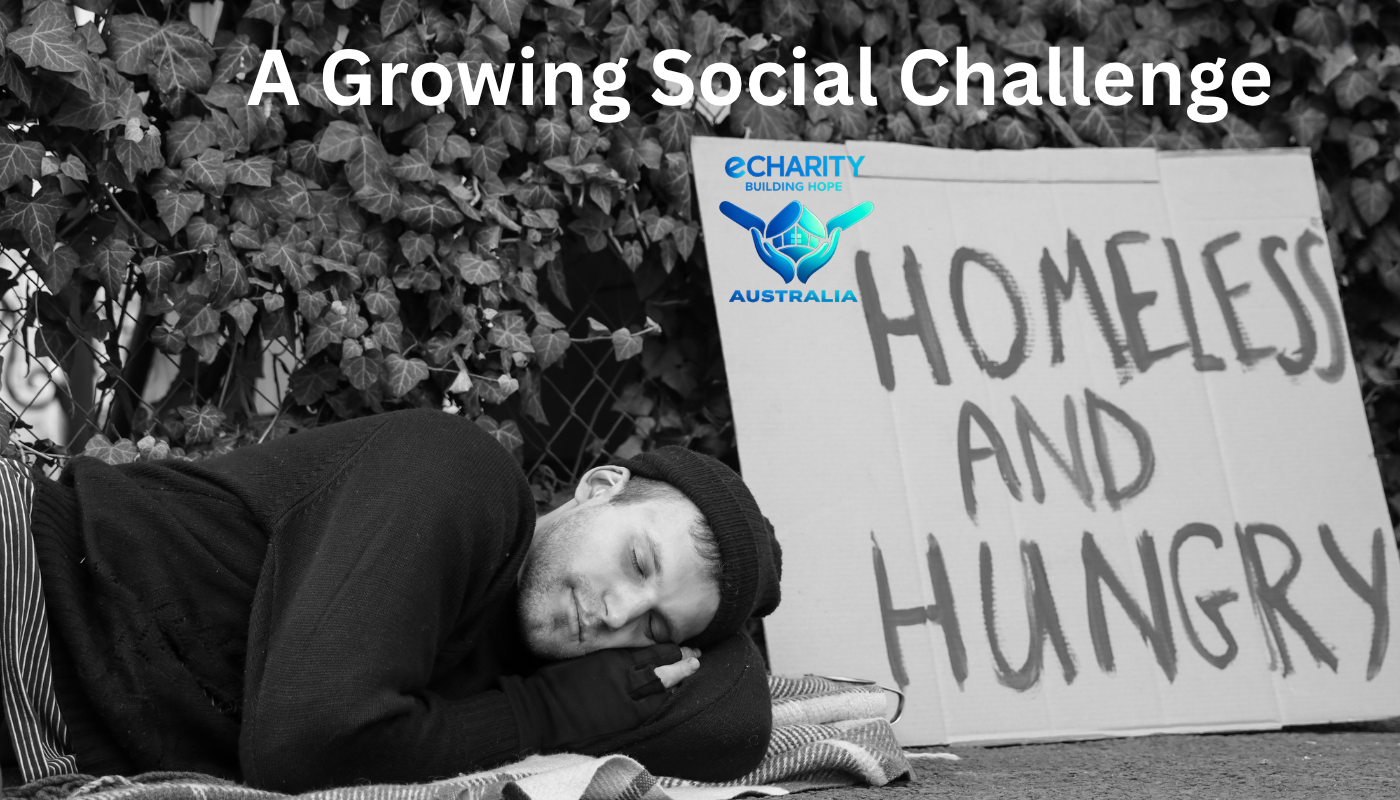
  • The Future of Homelessness in Australia: A Growing Social Challenge

    The Future of Homelessness in Australia: A Growing Social Challenge

    Homelessness in Australia is expected to remain a significant and evolving challenge, as housing affordability pressures, cost-of-living increases, and broader economic factors continue to affect individuals and families. While services are in place to provide support, long-term outcomes will depend on how these pressures are addressed over time.

    A housing system under strain

    Housing availability and affordability remain key issues. In many areas, rental vacancy rates are low and prices have increased, placing pressure on low-income households. For some, this creates difficult trade-offs between housing costs and other essential needs.

    Access to social and affordable housing remains limited, with waiting times often extending over long periods. Without improvements in supply and accessibility, these pressures are likely to continue affecting vulnerable populations.

    Changing patterns of homelessness

    The profile of homelessness continues to shift. While rough sleeping remains visible, a growing number of individuals experience less visible forms of housing instability, including temporary accommodation or insecure living arrangements.

    Groups increasingly affected include families, older Australians, and young people. Ongoing cost pressures and limited access to stable housing can contribute to cycles of instability if not addressed early.

    Pressure on support services

    Community organisations and support services continue to experience strong demand for assistance, including housing support, food relief, and counselling services. Economic conditions such as inflation, employment uncertainty, and rising expenses can increase demand and place additional pressure on available services.

    Looking ahead

    Addressing homelessness requires a combination of immediate support and longer-term approaches. Areas of focus often include:

    • improving access to social and affordable housing
    • supporting health, wellbeing, and family services
    • strengthening early intervention and prevention pathways
    • addressing broader factors contributing to disadvantage

    eCharity Australiaโ€™s approach

    eCharity Australia, founded in September 2025 and currently undergoing registration with the Australian Charities and Not-for-profits Commission, is developing initiatives focused on addressing homelessness and related challenges.

    As the organisation develops, eCharity is working toward contributing to coordinated efforts that support individuals and families experiencing housing instability, while complementing broader work across housing, welfare, and community support.

    A spokesperson for eCharity Australia said:

    โ€œThe long-term direction of homelessness in Australia will depend on how effectively we respond to current challenges. Coordinated, practical approaches are essential to supporting more stable outcomes for individuals and communities.โ€

    A shared responsibility

    Homelessness reflects broader social and economic conditions. Addressing it requires coordinated effort across government, community organisations, and the wider sector.

    As eCharity Australia develops, its focus is intended to support practical, sustainable approaches that contribute to reducing housing instability and improving outcomes over time.one advocate said.

  • Homelessness Crisis in Australia Reaches Alarming Levels

    Homelessness Crisis in Australia Reaches Alarming Levels

    Homelessness in Australia has reached critical levels, with new figures revealing that tens of thousands of individuals and families are without safe, secure housing on any given night. Community organisations warn that the crisis is deepening, driven by a combination of rising living costs, a shortage of affordable housing, and increasing social disadvantage.

    According to the Australian Bureau of Statistics (ABS), more than 122,000 Australians were experiencing homelessness on Census night in 2021 โ€” a figure widely believed to have risen significantly since, as rental prices and mortgage stress continue to escalate. Families with children, women escaping domestic violence, and young people are among the most vulnerable groups.

    Advocates say that homelessness is no longer limited to people sleeping rough on the streets. Many are now living in cars, couch surfing, or relying on temporary accommodation, unable to access stable housing.

    โ€œHomelessness is not just about the absence of a roof over someoneโ€™s head,โ€ said a spokesperson for eCharity Australia. โ€œIt is about the loss of security, stability, and dignity. Without coordinated and timely intervention, the cycle of poverty and disadvantage will continue to deepen.โ€

    Community organisations across the country are calling for stronger investment in affordable housing, mental health services, addiction support, and emergency relief programs. Many also stress the importance of preventative measures, ensuring vulnerable individuals and families receive support before they fall into homelessness.

    eCharity Australia, founded in September 2025 and currently undergoing registration with the Australian Charities and Not-for-profits Commission, has committed to contributing to this space through housing support initiatives, welfare services, food security programs, and advocacy for systemic change.

    The scale of the crisis highlights the need for coordinated solutions between government, charities, and the broader community. As economic and social pressures continue to rise, homelessness remains one of the most pressing and complex challenges facing Australia today.